
You pick up your phone to reply to a message and, before you know it, you’ve spent 25 minutes watching short videos. It happens during work breaks, while waiting in line, after lunch, and especially when the day is over and you no longer have the energy to make another decision. The problem isn’t owning a phone—it’s opening an app on autopilot whenever boredom, fatigue, or discomfort shows up.
This 7-day phone challenge doesn’t ask you to disappear from conversations, neglect your work, or turn pleasure into the enemy. The goal is more specific: for one week, reduce compulsive scrolling and notice what triggers it. You’re not going to “reset your brain.” You’re going to create some friction between the urge and the screen so you can choose what to do again.
What this 7-day phone challenge changes—and what it doesn’t
“Dopamine detox” has become a catchy label for any attempt to stay away from social media, sweets, games, or short videos. But the term comes with a misleading promise: that you can cleanse, drain, or reset dopamine through a few days of deprivation. That isn’t how the body works.
Dopamine is both a neurotransmitter and a hormone that is necessary for important functions, including movement, sleep, pleasure, and motivation. The Cleveland Clinic explains why a literal dopamine detox doesn’t exist and notes that changes in this system are associated with serious conditions such as Parkinson’s disease, depression, and ADHD. Treating dopamine as a toxin is an oversimplification that creates more confusion than clarity.
What does exist—and can help—is behavioral change. In 2019, psychologist Cameron Sepah used the term “dopamine fasting” to describe reducing impulsive or problematic behaviors, such as excessive internet use, social media use, and emotional eating. That is the useful part of the idea: identify a habit that is taking over your life and test concrete limits.
My verdict is simple: “dopamine detox” as a neurochemical miracle is marketing. Seven days without Instagram won’t cleanse your brain or turn you into someone who is immune to distraction. But seven days of friction, observation, and replacement habits can show you why you open your phone, when you lose control, and which changes actually fit your routine.
The goal isn’t to feel less pleasure, become a productivity machine, or cut out exercise, music, reading, and social time. The more realistic version of the practice, as Mindbodygreen discusses in its look at so-called Dopamine Fasting 2.0, keeps restorative activities in your life. The focus should be on behaviors that cause distress, interfere with tasks, worsen sleep, or take away from your presence with other people.
Before day 1: choose two loops, not a joyless life
Extreme challenges often fail because they try to remove everything at once. Someone cuts out social media, streaming, games, sugar, music, shopping, and online conversations, as if more rules automatically mean more commitment. Within two or three days, daily life feels like punishment, and any slip-up looks like proof of failure.
Choose just two automatic loops to observe during the week. A good example is “Reels after lunch” and “phone in bed before sleep.” Another is “notifications during work” and “short videos when I feel anxious before starting a task.”
For each loop, write down four things on paper or in a notes app:
- The trigger: the time, place, emotion, or situation that comes before the use.
- The friction rule: what will make access less automatic.
- The ready alternative: a short activity that fills the break without requiring much willpower.
- The tracking measure: number of times you open the app, minutes spent using it, or how often you interrupt a task.
Friction can mean removing the app from your home screen, logging out, silencing notifications, or leaving your phone in another room. It isn’t a glamorous strategy, but it works because it changes the environment before the urge arrives. Forged Alpha lays out a seven-day plan built around trigger audits, fewer notifications, blockers, and physically moving your phone away from you.
Is your phone already getting in the way of your morning?
The first hour after waking often sets the tone for how scattered your morning feels. Learn how to create a more protected routine in how to stop checking your phone when you wake up.
Don’t choose an abstract alternative, such as “I’ll do something productive.” Have a physical action ready for the critical moment: a light book on your nightstand, sneakers by the door, water and a notebook in the kitchen, dishes to wash, or a five-minute task already picked out. When the urge hits, you won’t have to invent a new life—you’ll just need to follow the next available action.
Your 7-day no-scroll phone challenge plan
The plan below is not a total detox. It’s a habit experiment. You can keep using WhatsApp to talk with family and coworkers, maps to get around, your banking app to pay bills, and any tool you genuinely need. The limit applies to recreational, automatic scrolling that is taking away from your focus, sleep, or presence.
Day 1 — Do an audit without trying to be perfect. Use your phone normally, but write down every time you open the app you chose: the time, context, and emotion. You don’t need a long journal entry; one line is enough, such as “2:10 p.m., after lunch, tired, opened Reels.” The first day is about stopping yourself from calling “lack of discipline” what is usually a predictable pattern.
Day 2 — Turn off the invitations to come back. Disable notifications from social media, news, stores, games, and apps that do not need to interrupt you. Keep only alerts from people and commitments that truly matter. If an app only works because it calls for your attention all day, that tells you a lot about the relationship it wants to build.
Day 3 — Move the shortcut out of sight. Remove the compulsive app from your home screen, log out, or install a blocker for your hardest time of day. Don’t rely on self-control when you’re hungry, irritated, or exhausted. Keep the rule small and clear: for example, no short videos from 1:00 to 2:00 p.m., or no social media during the first hour of the morning.
Day 4 — Practice the 10-minute pause. When you want to open the app outside your agreed window, wait 10 minutes before deciding. During that time, do the alternative you prepared: walk around the block, have coffee without a screen, fold laundry, wash a mug, or simply sit by the window. The goal isn’t to never feel the urge. It’s to learn that an urge is not an order.
Day 5 — Protect the first and last hour of the day. Keep your phone out of the bedroom for seven days and block social media and short videos during the first hour after waking and the last hour before bed. In the morning, replace the screen with water, basic hygiene, paper planning, and one simple starter task. At night, keep a warm shower, stretching, light reading, or a conversation without a second screen within reach.
Day 6 — Test a return-to-focus session. Choose a task you’ve been putting off and do a short 25-minute block with your phone physically out of reach. When you finish, you can take a break—but don’t immediately hand it over to your feed. Stand up, breathe, drink water, or look into the distance—activities that actually restore your energy.
Day 7 — Compare, don’t judge. Review your notes and ask yourself: When did app openings decrease? Which trigger was still powerful? Which alternative worked without feeling like torture? Also compare the length of your sessions, how easily you returned to work, and the quality of the beginning or end of your day.
This plan supports two practical use cases. If your biggest problem is waking up and going to sleep while scrolling, test the first-and-last-hour rule for all seven days and track the urge, time, and emotion before allowing any exception. If the problem is one specific app, choose just one context—such as Reels after lunch—block it for 30 minutes, and have a short walk, screen-free coffee, or timed household task ready.
Want to take breaks without falling into the feed?
A break doesn’t have to be productive, but it does need to end eventually. Learn a simple structure in breaks that help you rest without turning into an hour on your phone.
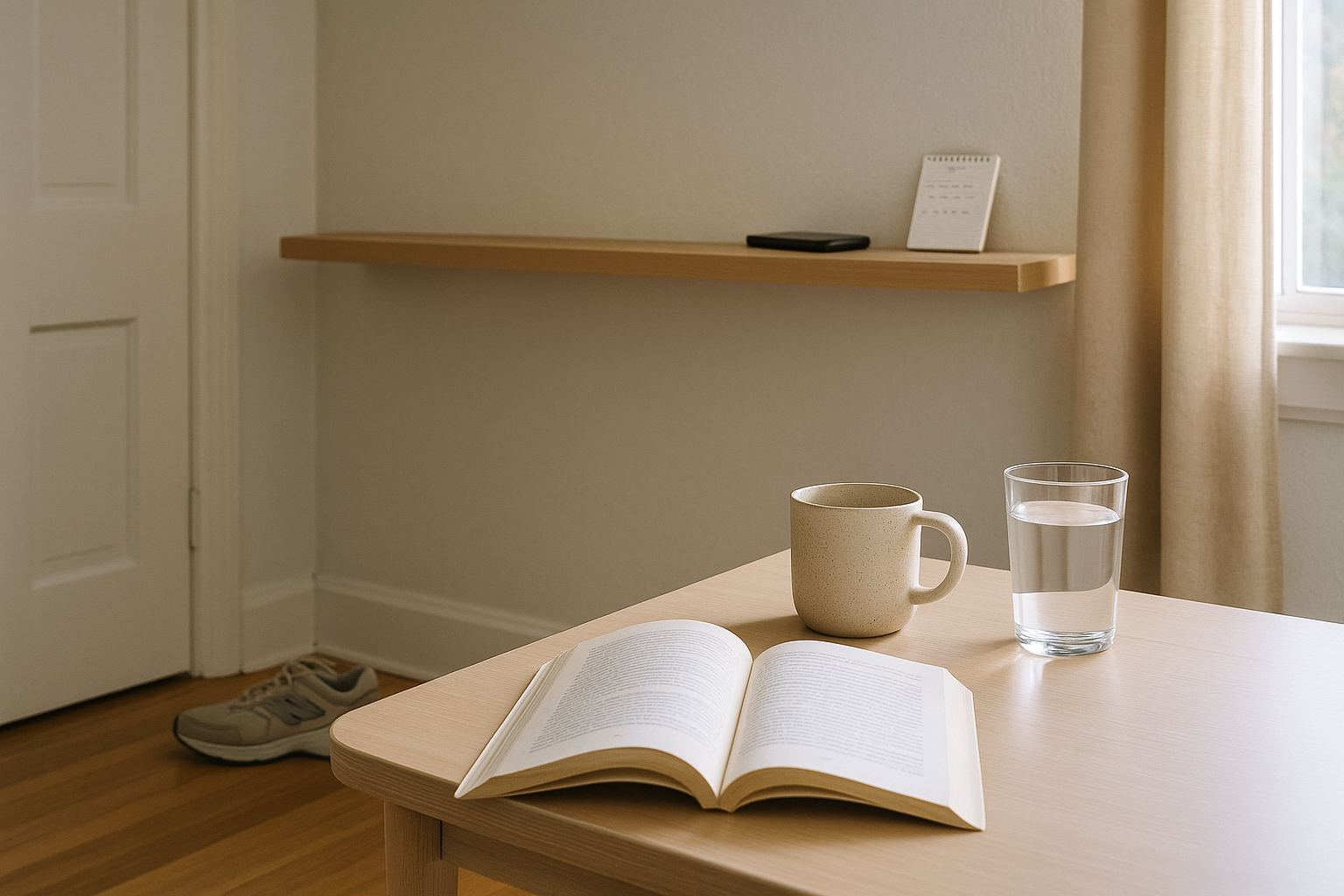 Foto: Acervo pessoal/Modo Offline
Why most people quit between day 5 and day 10
The first few days may even feel easy because there is novelty, excitement, and a sense of mission. Then the challenge runs into real life: a boring meeting, an argument at home, poor sleep, a long line, a backlog of work, anxiety before a decision. Your phone wasn’t just entertainment; in many moments, it was a quick way to avoid feeling what was there.
That’s why the urge to quit grows as the week goes on. You removed the escape, but you may not have prepared another way to move through boredom, stress, and exhaustion. Without a replacement, the challenge leaves an empty space—and your brain tends to return to the familiar path, not because it “needs dopamine,” but because that path is fast and available.
The answer is not to make the protocol so strict that it becomes unbearable. For people under heavy stress or those who become extremely irritated by blockers, time-based limits tend to be more sustainable than a total ban. Instead of declaring, “I’m never using social media again,” try: “I’ll use it from 7:00 to 7:30 p.m., sitting at the table, not in bed.”
It is also worth planning your return before the seventh day is over. If you treat the challenge as a temporary prison, the natural reaction will be to make up for everything the next day. Choose one rule to keep for two weeks, such as keeping your phone out of the bedroom, leaving notifications off, or watching short videos only after dinner.
Don’t turn one rule-breaking app opening into a moral collapse. If you spent 40 minutes in the feed on day 6, notice what happened beforehand: maybe you slept poorly, argued with someone, or tried to begin a task that was too big. A relapse is information about the system; use it to adjust the timing, environment, and alternative the next day.
There is an important limit here. A short challenge can restore choice and reveal triggers, but it does not replace professional care for ADHD, depression, intense anxiety, trauma, substance dependence, or severe compulsions. If phone use comes with ongoing distress, isolation, or an inability to complete basic responsibilities, consider talking with a psychologist or psychiatrist.
Frequently asked questions about the 7-day phone challenge
Do I need to go completely without my phone for seven days?
No. The 7-day phone challenge works best when it targets automatic, recreational use—not tools needed for work, safety, family, and everyday life. Decide in advance which apps, times, or rooms will be protected.
Can I use music, exercise, and reading during the challenge?
You can—and should—if those activities are restorative for you. The goal is not to eliminate all pleasure, but to reduce the specific behavior that is interfering with your sleep, focus, or relationships. Cutting everything out usually increases the sense of deprivation and makes quitting more likely.
What should I do when the urge to scroll is very strong?
Take a 10-minute pause and do a physical alternative that is already prepared. Walking, taking a shower, drinking water, tidying a small area, or talking with someone are better options than trying to “not think about it.” After 10 minutes, decide again.
Do app blockers actually help?
They help when you use them as a barrier, not as a magic solution. A blocker creates time between the urge and the action, especially during predictable hours, but it needs to come with an alternative. Without one, you’ll just try to find another app to fill the same gap.
What if I fail on day 3 or day 6?
Don’t restart the week as punishment. Record the trigger, adjust one rule, and keep going until day 7. The useful result isn’t a perfect streak—it’s understanding when the habit takes the wheel.
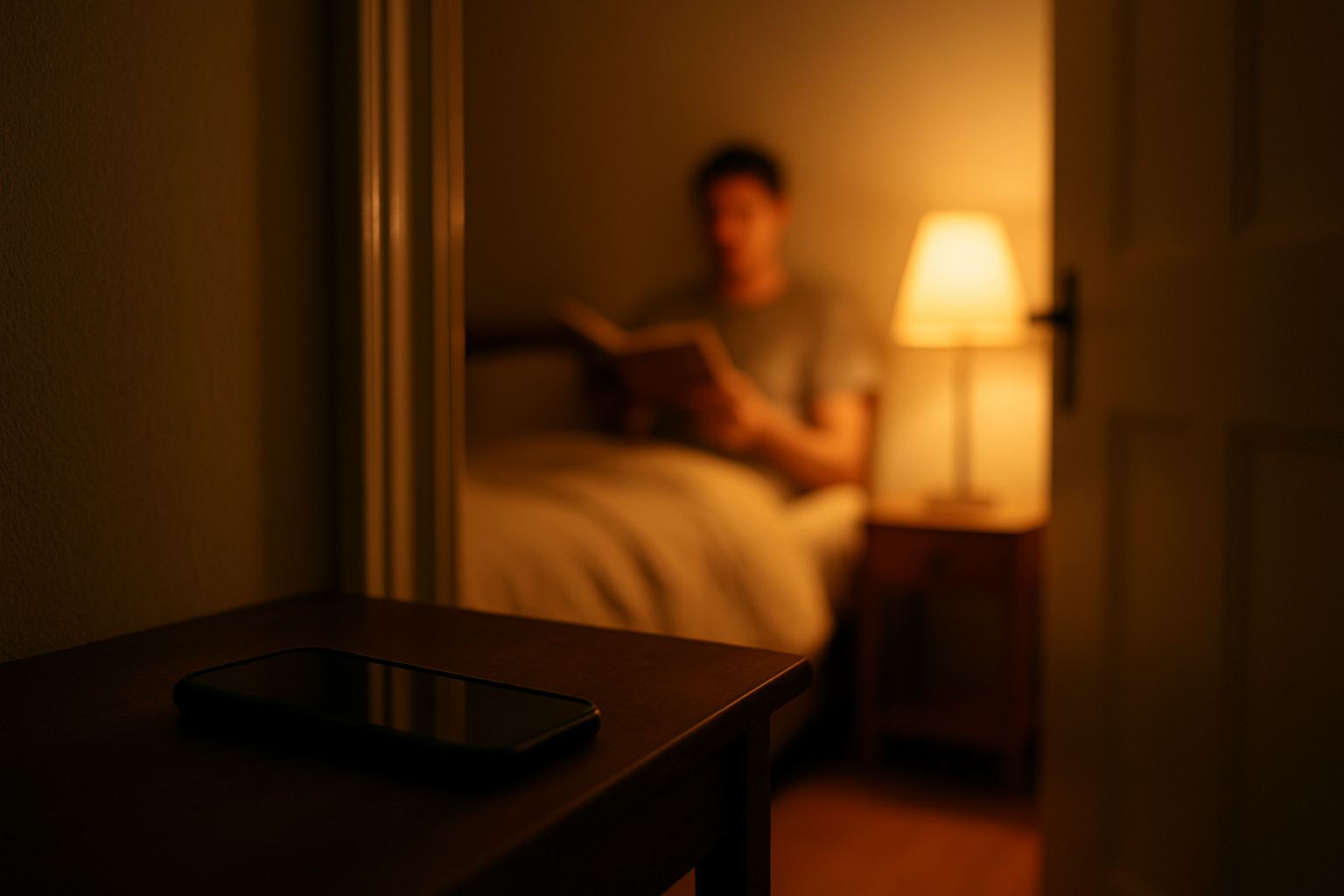 Foto: Acervo pessoal/Modo Offline
Conclusion: use the seven days to build choice
The friction-and-replacement experiment works because it swaps an unrealistic goal for a practical question: When does my phone decide for me? Seven days are enough to spot patterns, test blockers, identify difficult times, and notice which alternatives actually help. They are not enough to solve every emotional problem or transform your routine without further adjustments.
At the end of the week, keep one rule that was both effective and manageable. Maybe it’s keeping your phone out of the bedroom, setting a fixed window for social media, or doing 25 minutes of focused work with your phone in another room. The best outcome is not never wanting to scroll again—it’s noticing the urge, creating space, and deciding whether that use makes sense right now.
Read more: